
Commercial dishwasher buying guide for busy Australian venues
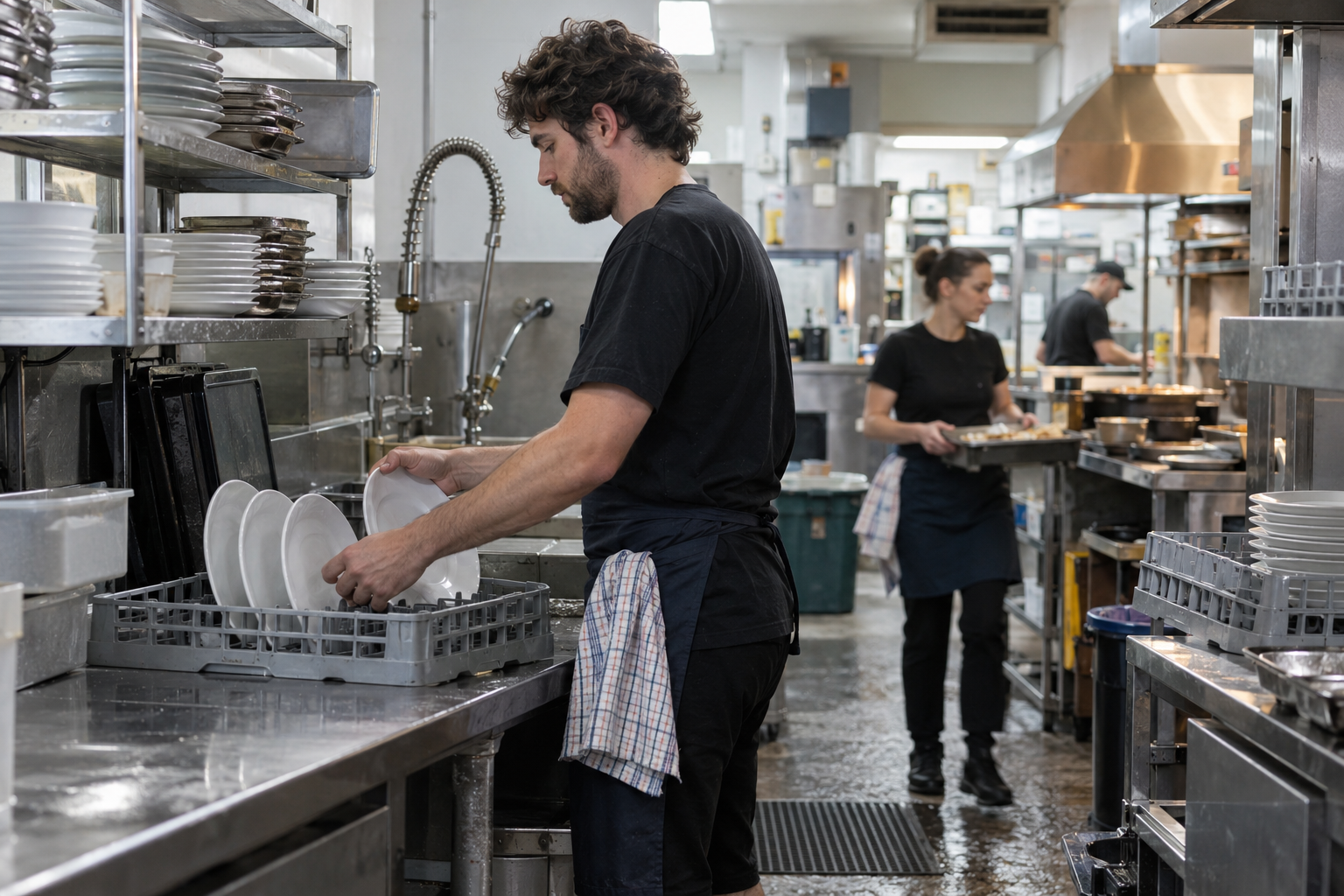
Choose a commercial dishwasher around your busiest washing period, the items you wash and the space available for handling them.
Choose a commercial dishwasher around your busiest washing period, the items you wash and the space available for handling them. Cycle time matters, but loading, scraping, unloading and drying also determine whether clean plates arrive when service needs them.
For a suburban pub juggling lunch, dinner and weekend bookings, the aim is a steady wash-up flow. Buying on daily cover numbers alone can leave the kitchen short during the one hour that really counts.
How much washing capacity do you need?
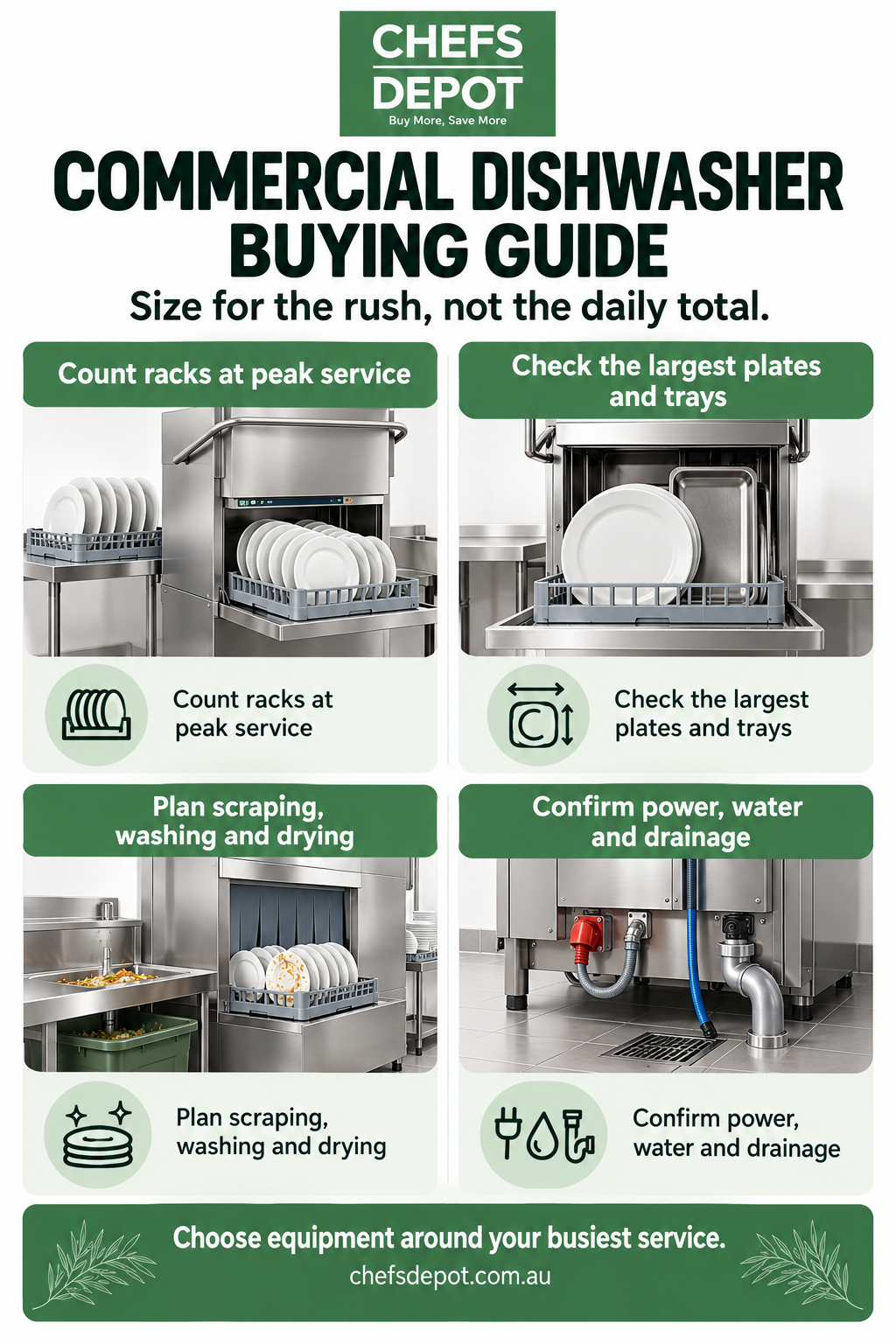
Record what returns during peak service: dinner plates, side plates, bowls, cutlery and glasses. Then work out how those items fit into suitable racks. Oversized crockery and mixed loads can change the calculation considerably.
For example, if your measured rush produces 18 loaded racks in half an hour, your process needs to handle that arrival rate while allowing for loading and unloading. This is a planning example, not a recommended machine rating.
Ask suppliers how their throughput figures are calculated. A short wash cycle does not mean someone can continuously load and unload at that speed while completing other jobs.
Should you choose undercounter or passthrough?
An undercounter machine can suit a compact wash area where floor space is tight. Staff load through the front, so check bending, door clearance and where clean racks will land.
A passthrough model works with adjoining benches, allowing racks to move through the washing station. It can improve handling and separation of dirty and clean work, provided the surrounding layout supports it. The format alone does not guarantee greater washing capacity.
The Washtech UD undercounter dishwasher/glasswasher, SKU MOF-UD, is worth shortlisting for a compact station. Its 500 mm rack format and selectable one-, two- and three-minute cycles give you concrete details to test against your loads.
The Washtech M2 passthrough dishwasher, SKU MOF-M2, also uses 500 mm racks and offers one-, two- and three-minute cycles. Consider it when bench-to-bench rack movement suits the pub's workflow.
What should you check before ordering?
Take your largest plate, tallest glass and awkward serving dish to a demonstration, or provide accurate measurements. Confirm usable opening height and suitable racks rather than relying on external machine dimensions.
Have the proposed model's electrical supply, water connection and drainage requirements checked against the site. Include benchwork, pre-rinse equipment, chemical dosing and any water treatment in the discussion.
Ask who provides local servicing and how operators are trained. Cleaning filters and spray arms, selecting appropriate cycles and loading correctly all belong in the handover. Make sure the person running wash-up gets a say before the purchase is finalised.
Common buying questions
Can one machine wash plates and glasses?
Some models are designed for both. Check suitable racks, programmes and your service pattern. A separate glasswashing station may be useful if bar demand regularly clashes with kitchen washing.
Is the fastest cycle always the best choice?
No. Select a cycle suitable for the load and soil level. Ask for demonstrated results with the crockery and residues your venue actually produces.
Should I budget for installation separately?
Ask for an itemised quote. Delivery, connections, commissioning, benches and accessories may sit outside the equipment price.
Give Chefs Depot your peak rack demand and wash-area measurements to compare suitable machines and a complete installation scope.