
Combi Oven vs Convection Oven: Buying Guide | Chefs Depot
Compare combi and convection ovens for Australian cafés and caterers. Explore suitable models, cooking capabilities and what to check before buying.
Combi Oven vs Convection Oven: Which Suits Your Commercial Kitchen?
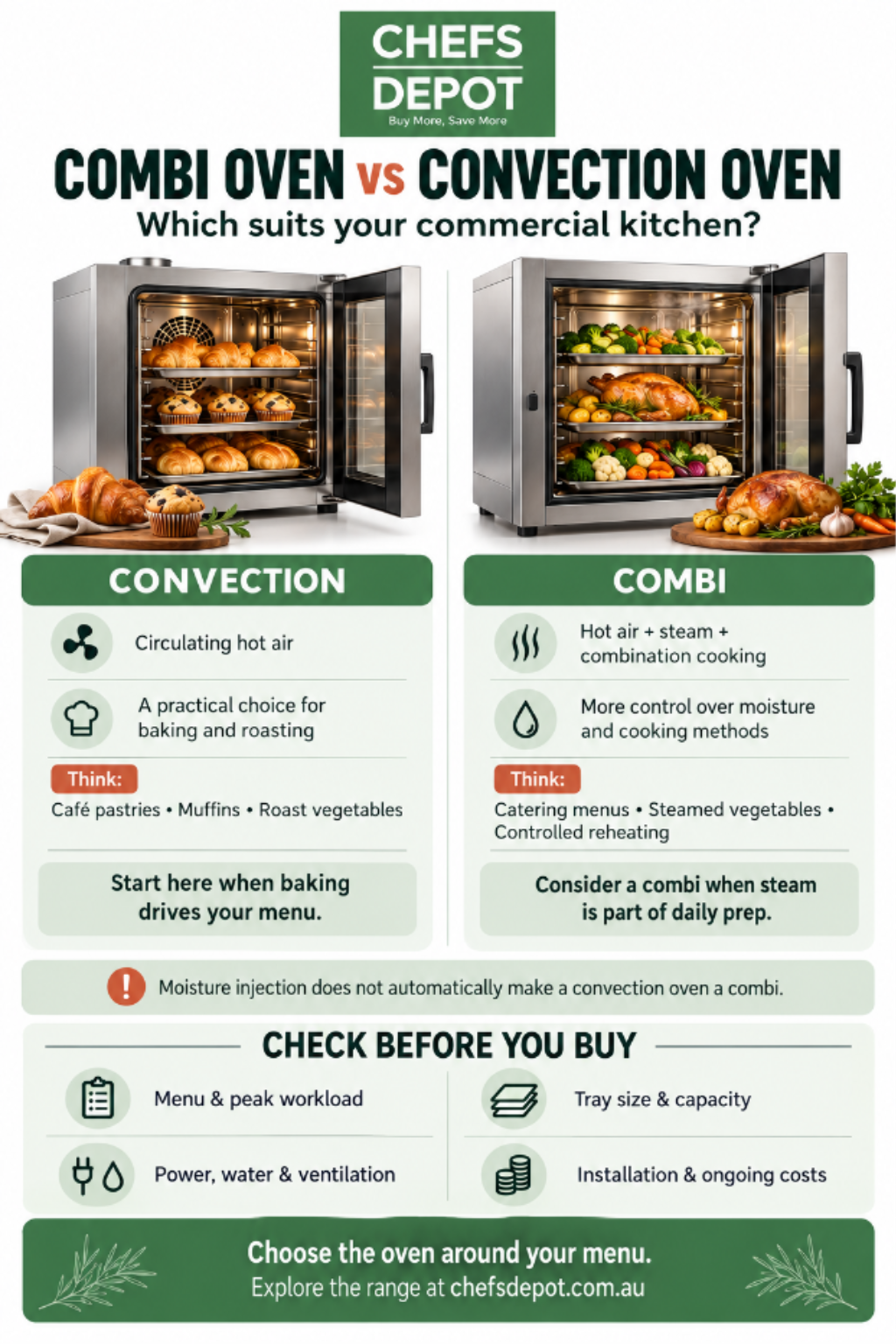
Choosing between a combi oven and a convection oven comes down to your menu. A convection oven circulates hot air for baking and roasting. A combi oven adds dedicated steam and combination cooking, giving you more control over moisture.
For an Australian café baking muffins and pastries, convection may cover the job. For a caterer preparing roast meats, vegetables and meals for reheating, a combi deserves a closer look.
When is a convection oven the better choice?
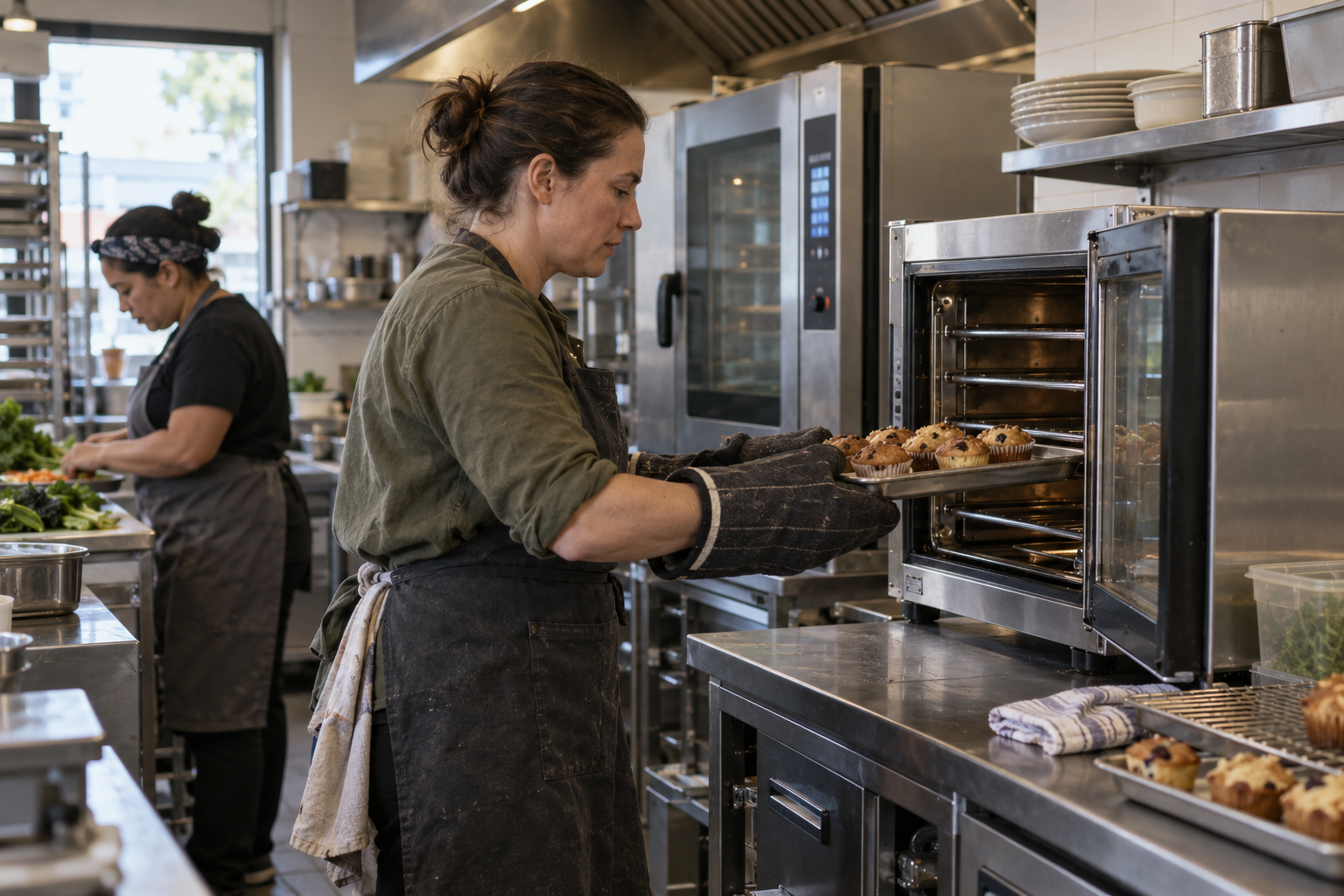
Think about a suburban café’s morning: croissants before opening, muffins through breakfast and trays of roasted vegetables ahead of lunch. If that sounds familiar, start by comparing convection ovens.
The Turbofan E32T4 convection oven (SKU: MOF-E32T4) is worth shortlisting for this workload. It accommodates four 600 × 400mm trays and features touchscreen controls, shelf timers and a two-speed reversing fan.
Those features give a baking-focused team practical control over repeat batches. Check tray dimensions before ordering, though: bakery trays and gastronorm pans are different formats.
The E32T4 also offers moisture injection. That is a useful reminder that some convection ovens add humidity, but this does not make them equivalent to a combi with dedicated steam cooking.
When does a combi oven earn its place?
A café expanding into corporate catering has a different brief. Alongside baking, the team might need to steam vegetables, roast proteins and reheat prepared dishes without excessive drying.
The UNOX CHEFTOP MIND.Maps PLUS XEVC-0511-EPLM-MS (SKU: UNO-XEVC-0511-EPLM-MS) is a five-tray GN 1/1 combi oven to consider. Its listed features include humidity control, a multipoint core probe and automatic cooking programmes.
For a catering kitchen juggling several preparation tasks, these capabilities can support a broader menu within one oven. Whether five trays are enough depends on batch sizes and timing, rather than a blanket number of meals per day.
The purchasing question is straightforward: will your team regularly use steam and combination cooking? If yes, those capabilities have a clear purpose.
What should you check before buying either oven?
Start with your busiest service and work backwards:
Capacity: Which dishes need oven space simultaneously, and which trays do they use?
Services: Confirm the exact model’s electrical supply, water, drainage and ventilation requirements.
Installed cost: Include stands, trays, water treatment where required, installation and commissioning.
Daily ownership: Compare cleaning, consumables, servicing access and staff training.
Do not assume a convection oven plugs into a standard socket. The E32T4 listing specifies a 27A supply and no supplied cordset, so have your installer confirm the connection.
Common questions before you choose
Can a combi oven work like a convection oven?
Yes. A combi can use hot-air convection without added steam, alongside its steam and combination modes.
Is a combi oven always better for a small café?
No. If most oven work is baking and roasting, a suitable convection model may meet the brief. Choose from the menu and workload, not the number of features.
Which oven should a catering business choose?
A combi is worth prioritising when steaming, batch cooking and controlled reheating are regular tasks. A baking-focused caterer may have different needs.
Ready to narrow the shortlist? Compare these models at Chefs Depot and request a quote with your menu, tray requirements and available services. That gives the team a practical starting point for matching an oven to your kitchen.